

Pride, The 1st Deadly Sin
Looking into the importance of faith, hope, and charity, and how embracing these virtues can help us avoid the pitfalls of pride.

Issue #19:
Good day and welcome back to The Zen Journal. I want to talk to you today about pride. Specifically, the deadly sin of pride that fuels egotism, hubris.
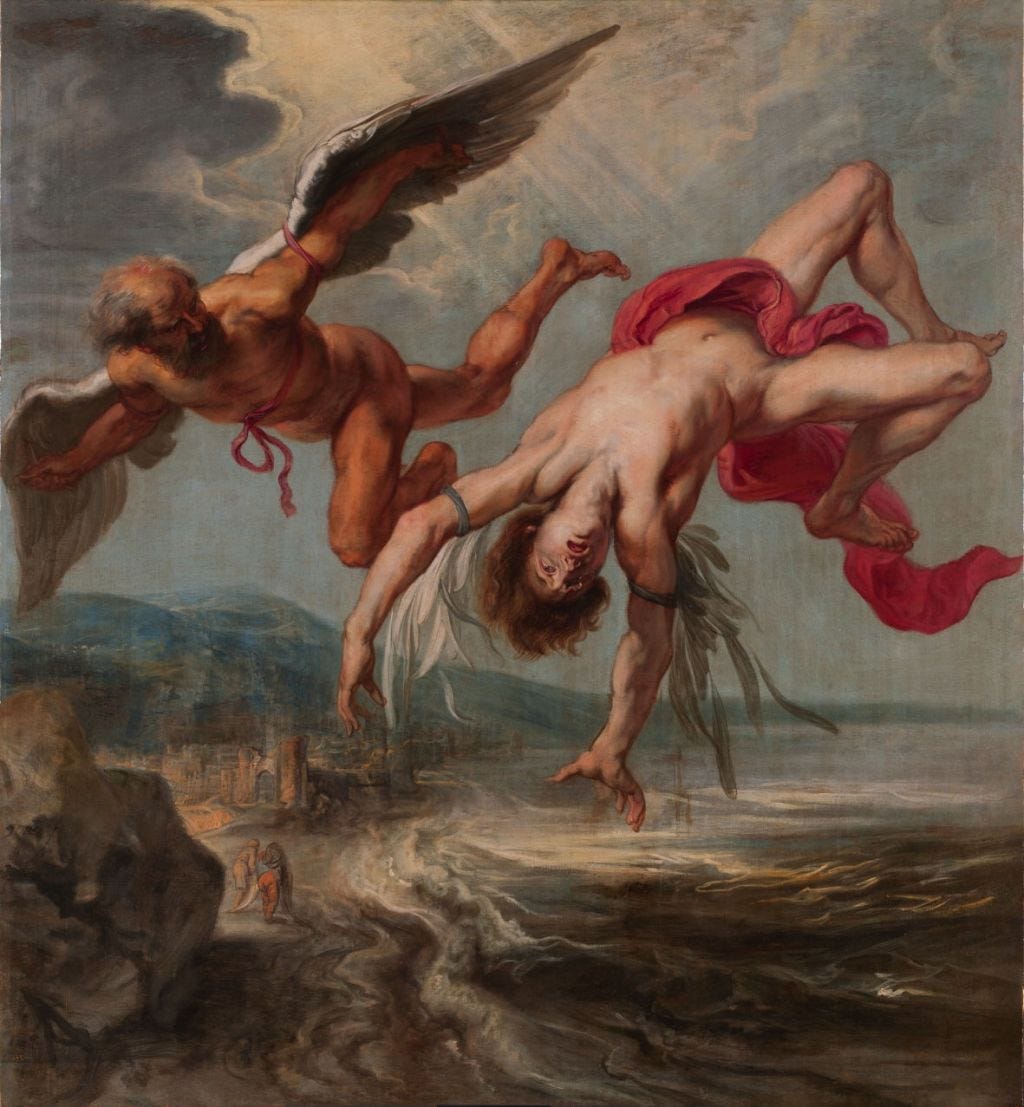
I’m not here to discuss about the authentic pride we feel when we celebrate a child’s achievements or the satisfaction of doing our best.
Instead, I want to talk about hubris.
That excessive, overbearing arrogance that makes us believe we know best and have the right to impose our will on others.
Hubris is not just a personal flaw; it’s a distortion of what is rightfully not ours to begin with. It’s something we see a lot in politicians, world leaders, and agitators.
Those who are consumed by the belief that they, or a select few, are wise enough to reshape the world according to their own vision.
Hubris is the opposite of humility.
Three Eternal Gifts
In 1 Corinthians 13:13, we’re reminded of three eternal gifts: faith, hope, and charity.
These aren’t just abstract ideas; they’re practical tools for living humbly and in harmony with others.
Faith is there when we face doubt, hope helps when despair emerges, and finally charity; it doesn’t just mean giving money to the poor. It’s much deeper than that.
Charity begins not with our hands, but in our thoughts. If you examined your thoughts over the past week, what would stand out?
Too often, we dwell on the faults of others rather than their virtues.
But charity of thought means choosing to overlook faults and focusing instead on the good in others.
Charity must also guide our words. The tongue can be a dangerous weapon or a powerful instrument of love.
If every word you spoke last week was transcribed, what would it reveal?
Did you speak words of encouragement, forgiveness, and kindness, or did you cut others down?
And finally, charity is visible in our actions. Do we look for chances to help, to serve, to show love? Or have we been lazy, self-centered and inattentive to the needs of others?
Without this kind of charity, we are nothing.
From Babel to Babylon
Hubris is as old as time itself: Nimrod tried to build the Tower of Babel to reach the heavens1 and Icarus flew too close to the sun.2
These are ancient lessons about the dangers of arrogance and overreach.
The Bible doesn’t mince words about pride and its consequences. In 1 Corinthians 13, Paul makes it clear that without charity, without the ability to give others the benefit of the doubt, we are nothing, no matter how impressive our gifts or actions might be.
Even if we possess great knowledge or faith, without charity, it profits us nothing.
Paul also speaks about maturity. About putting away childish things as we grow into adulthood. This brings us back to one of my previous posts illustrating what it means to be a grown up.
This is a call for all of us to take responsibility, not only for our own lives but also for our obligations to our loved ones and society as a whole.
It’s a reminder that we must grow up, stop clinging to childish ideas, and approach life with the humility it demands.
Pride leads us into trouble, but humility leads us to peace and understanding.
We have a choice. We can cling to arrogance and ego. Or we can choose humility, charity, and maturity to guide our lives.
Let’s choose the latter.
I look forward to continuing this journey with you. Please feel free to share your thoughts, reflections, or questions as I dive deeper into these teachings.

Nimrod and the Tower of Babel (Biblical)
Story: In the Book of Genesis (Genesis 11:1–9), humanity, speaking a single language, unites to build a massive tower, the Tower of Babel, that reaches the heavens. Nimrod, a mighty king and hunter, is often associated with leading this effort.
Hubris: The act of building the tower is seen as an attempt to challenge God’s authority and achieve divine status. It represents human pride in trying to transcend mortal limits and become godlike.
Consequence: God intervenes by confusing their language, causing miscommunication and scattering them across the earth.
Lesson: Prideful ambition without humility leads to division and downfall.
Icarus flying too close to the sun (Greek Mythology)
Story: Icarus and his father escape Crete using wings made of feathers and wax. Icarus’ father warns him not to fly too high or too low. But Icarus, exhilarated by the thrill of flying, soars too close to the sun, melting the wax and falling into the sea.
Hubris: Icarus's pride and overconfidence blind him to his limitations and to his father’s wisdom.
Consequence: His wings fail, and he plunges to his death.
Lesson: Arrogance and disregard for wise counsel lead to self-destruction.
Any judgmental thought about anything is bad is hubris. It is saying my limited perception is superior than the reality resulted from the universe’s 13.8 billions years of evolution.
The problem with being filled up with yourself is that you cannot receive anything. Progress stops.